Off the Beaten Path
Explore Maine’s Hidden Gems and Far-Flung Festivals This Summer
By Anne Gabbianelli
No matter where you travel in Maine, you will be treated to beauty, tranquility, fascinating history, and plenty of festivities.
Celebrating New Sweden’s Heritage
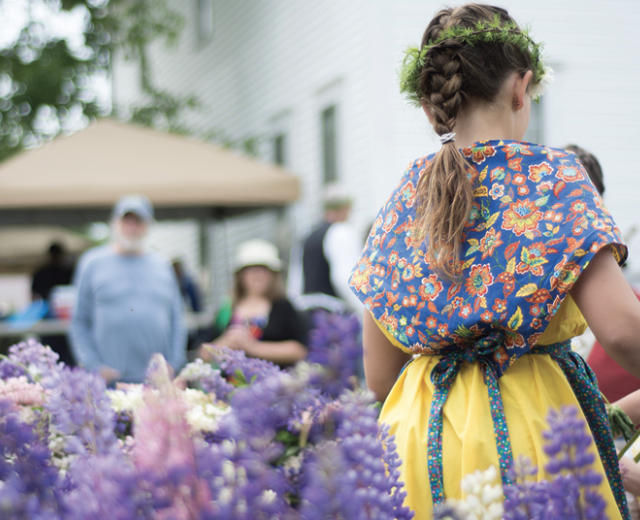
In New Sweden, the colorful Midsommar Festival is held the third weekend of June.
“My connection to the Midsommar Festival spans generations,” said Jessica Ciszewski, chair of the Midsommar Planning Committee. “My mother was one of the Little Swedish Folk Dancers at the centennial celebration in 1970, I wore the same costume as a dancer at the 125th celebration, and now my daughters have each had their turn.”
“The Swedish celebration of the summer solstice is a joyful marking of light, community, and tradition. One of the central traditions is gathering flowers to create crowns and decorate the maypole, and the Little Swedish Folk Dancers perform traditional dances,” Ciszewski said.
Wendell Spooner has lived in New Sweden for 86 years, and his mouth still waters when he speaks of his mother’s cooking. “At Christmas we had lutefisk, a traditional Swedish cod dish served in a sauce with cranberries,” he said. Spooner also raved about risgrynsgröt, a rice pudding dish, and homemade rye bread called rågbröd.
Other New Sweden celebrations include Founders’ Day, held July 23, commemorating the arrival of about 50 Swedish settlers in 1870. In addition, Santa Lucia is celebrated each December as a bearer of light during dark Swedish winters.
Outside festival times, visitors can tour the New Sweden Historical Society Museum and gift shop. The nearby towns of Stockholm and Woodland also offer seasonal museums, and the Nylander Museum in Caribou houses the collections of Olaf Nylander, a Swedish immigrant and naturalist.
A Taste of History & More in Machias
Another festival with historical overtones underway the same weekend is the annual Margaretta Days Festival & Craft Fair in Machias, commemorating the Battle of the Margaretta. During the first naval battle of the American Revolution, Machias patriots successfully captured the British vessel HMS Margaretta.
During the festivities, Revolutionary War reenactors of Downeast Maine display several trades of the time. Reenactor Chris Sprague has ancestral connections.
“I am a descendant of several Revolutionary War soldiers — one who was in the Boston Tea Party, others who were in the Battle of Bunker Hill, and several who were in the Battle of the Margaretta,” Sprague said.
Volunteer Joe McBrine is active with ongoing work at Machias Liberty Village, operated by the Machias Historical Society. The goal is to develop a living history site, including a replica of Fort Foster, built in 1776.
“With its blend of preservation, education, and community involvement, Liberty Village promises to become a landmark destination celebrating our enduring Revolutionary spirit and rural heritage,” McBrine said. He has produced numerous video productions documenting Machias history.
When in Machias, be sure to visit the Burnham Tavern Museum, built in 1770. It is just off Route 1, about a half-mile from the iconic Helen’s Restaurant.
Another summer event worth checking out in the area is the 50th Annual Machias Wild Blueberry Festival, Aug. 14-16, a celebration of the powerful little fruit that puts Downeast Maine on the map each August at harvest time. More than 200 vendors, many with a focus on blueberries, are on the agenda. Tickets go on sale in July.
Exploring Castine
Castine, home of Maine Maritime Academy since 1941, sits off the beaten path but is worth the trip.
Longtime resident Doris Russell, 99, summed it up: “Everybody volunteered to keep our community so tight. We take care of our elm trees and historical places.” The elm trees, by the way, are one of the healthiest populations remaining in Maine.
Like Machias, Castine is steeped in history.
“From Wabanaki history to the town’s Revolutionary War significance and importance during the War of 1812, history buffs will find a lot to explore here in Castine,” said Kate McMahon, executive director of the Castine Historical Society.
“Our town takes our history very seriously. We have an incredible 19th-century lighthouse at Dyce Head, several Revolutionary War-era forts, beautiful architecture, and small-town charm,” McMahon said. “We even have one of the most intact town commons remaining in New England.”
Matthew Powell, president of the Castine Merchants Association, said, “We joke that Castine has been the place to be since 1630.”
The centuries can be experienced through free walking tours throughout the summer.
“Victorian summer hotels reopen, restaurants spring to life, and the number of residents swells to triple the winter population,” Powell said. “Although we always encourage year-round visits to Castine, the summer high season between the Fourth of July and Indigenous Peoples Day is undoubtedly when the town is liveliest.”
Hidden Gems in Bethel
More hidden gems can be found in Bethel. Literally.
“The Maine Mineral & Gem Museum celebrates Earth and cultivates critical thinking through research, education, and dynamic exhibitions,” said Kristy Griffin, the museum’s executive director.
The museum calls Bethel home because the mountains of western Maine sparkle with tourmaline, as Maine remains a principle source of the gem.
“There’s a collection of more than 80,000 mineral, rock, and gem specimens; mining-related artifacts; and one of the world’s most exceptional meteorite collections, with more than 6,000 extraterrestrial rocks originating from the Moon, Mars, and the asteroid belt,” Griffin said.
Experimental chemist and researcher Al Falster, part of the museum’s research team, has a weekly ritual.
“I go every Sunday to [old mines in] Greenwood looking for anything that comes out of pegmatite in hopes of finding a void in the rock where you find mica, quartz, and gem minerals like tourmaline, aquamarine, topaz, and some garnets,” he said. “It’s cool to run into surprises, and on [select days], with free public mineral identification, I do see interesting things.”
Bethel is also a year-round outdoor destination.
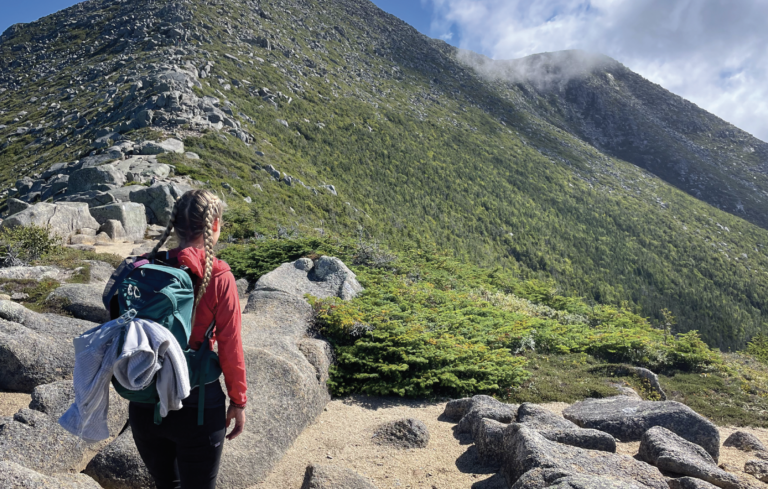
“The surrounding peaks, trails, rivers, and streams in the Bethel area are a natural hub for hiking, fly fishing, biking, skiing, snowshoeing, exploring waterfalls and covered bridges, or simply taking in the natural beauty of the area,” said Bobbi Vandenbulcke, executive director of the Bethel Area Chamber of Commerce.
Whether you’re chasing summer festivals, scenic beauty, or small-town charm, Maine’s hidden gems offer unforgettable adventures far beyond the usual tourist trail.