Going public
Considerations for Weddings in Parks and Public Spaces
By Casey Bernard
Coastal views, serene lake sunsets, iconic lighthouses — any of these can make for an ideal wedding location. And some of the best spots to find these across Maine are state and national parks and other public locations. Besides the natural beauty of hosting an event in a public space, these unique locations can offer more intimate and cost effective options.
Planning a wedding often has challenges, but when planning a wedding at a public location, brides and grooms need to take extra considerations and plan ahead. Below are some things to keep in mind when planning an event at a public space.
Limited Number of Guests and Areas of Use
A ceremony with a lighthouse backdrop may be the ultimate Maine wedding location. At Marshall Point Lighthouse, weddings are allowed a maximum of 50 guests and ceremonies are limited to lighthouse grounds. Portland Head Light on Cape Elizabeth allows much larger parties, up to 150 guests, but requires special approval, which can take up to 90 days.
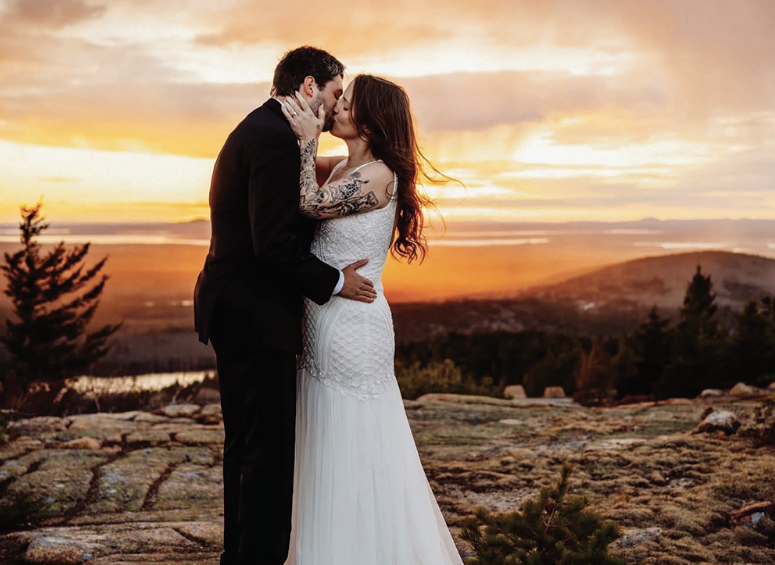
Considering a wedding ceremony at the top of Cadillac Mountain or at the base of Jordan Pond? Both would provide a stunning backdrop for photos. Acadia National Park requires wedding ceremonies with more than 10 guests to obtain a special permit no later than 72 hours in advance, and some areas, including Cadillac Mountain, limit ceremonies to 30 guests with sunrise and sunset ceremonies not permitted.
Admission Fees
At state parks across the state, a small per person entry fee is required, in addition to other rental fees. At Moose Point State Park in Searsport, which boasts views of Penobscot Bay as well as Islesboro, Sears Island, and Northport Harbor, visitors must pay $3-4 per person for entry — an affordable but perhaps unexpected charge.
The park has a pavilion and picnic benches which could be reserved for a casual reception after a waterfront ceremony, for an additional fee. At all Maine state parks alcoholic beverages are not permitted in historic sites, day-use areas, or in the common public areas in campgrounds.
Lack of Services and Limited Accessibility
Some public parks and spaces can be tricky in terms of access to bathrooms and electricity, as well as walkability or wheelchair access.
At Fort Knox, located in Prospect at the mouth of the Penobscot River, event planners have a variety of options for hosting an event. Weddings and ceremonies can be hosted at one of several locations among the 144 acres on the property, including pavilions, simple picnic tables, and parade grounds in the center of the fort.
“The backdrop at Fort Knox is magical and castle-like, but there are some challenges to an outdoor venue,” said Dean Martin from Friends of Fort Knox. For one, depending on where the event will be held, restrooms may not be immediately available. Electricity is also limited in some areas.
Because Fort Knox is built on the side of a hill and was constructed in the 1840s, many of the spaces are not ADA compliant. For guests with limited mobility, accessibility should be considered when looking at spaces with uneven terrain and long walks. At Fort Knox, some accommodations can be made with golf carts or limited car access for guests who need extra assistance.
Local Connections
History lovers might want to consider Castine on the Blue Hill peninsula, where weddings can be held at one of the historic forts, the grassy traditional Town Common, or a small ceremony in the garden in front of Dyce’s Head Lighthouse.
Fort Madison, erected in 1808 and under British occupation during the War of 1812, sits at the edge of Castine’s peninsula with unobstructed views of Penobscot Bay. Fort George sits at the top of the hill of Castine and is the site of one of the most significant battles in the Revolutionary War, with remnants of the original fort still standing.
Dyce’s Head lighthouse has a small grassy area in front of the lighthouse that would provide a stunning backdrop for a ceremony, but in Castine the lighthouse keeper’s home is occupied by the local kindergarten teacher. The resident has made accommodations to allow for events in the space, but has the right of refusal.
To have a ceremony at any of these spaces, brides and grooms must have a connection to Castine. Residents can rent the spaces for $100 and non-residents with a connection to the town pay $200. A connection to Castine can mean a family member is a resident or homeowner in the town or the reception will be held at one of the local inns. The rule was created to limit the number of ceremonies in town. Those wishing to arrange a ceremony at one of the public spaces in Castine have to work with the team in the town office for approval and payment.
Public Spaces Mean Unexpected Guests
Of course, hosting an event in a public space often means other visitors to the space may become uninvited guests to the ceremony. Karen Moytcka, who works at the Castine town office, explained that most people who stumble upon a wedding stay out of the way and find a way to enjoy the public space without impeding the ceremony. However, these extra guests may be seen walking in the background or may linger to watch the ceremony from afar.
Rent a Space with a Park Feel
If hosting an event at a public space is not the right fit for a couple, local farms and camps across the state can provide a relaxed atmosphere with a more private experience. Toddy Pond Farm in Monroe is a working farm that hosts farm-to-table dinners and private events. Away from the coast, on the banks of Lake Webb, the Kawanahee Inn is a small lakeside resort with rentable cabins that provides that Maine woods camp experience.
With some creativity and planning ahead, local brides and grooms can find many affordable outdoor options at public spaces with some of Maine’s best vistas.