Foraging for Food
Give dining al fresco new meaning with tips from Maine foragers
By Patricia Estabrook
No room for a vegetable garden? No worries. Delicious things are growing all around us, if you know where to look. Simply take a walk outdoors, and with a few tips from foraging Mainers, you can give dining al fresco a whole new meaning.
In Your Own Yard
Tom Seymour of Frankfort is known as the godfather of Maine foragers and those interested in identifying Maine’s wild plants. His book “Wild Plants of Maine” is an essential guide for novice and expert foragers alike, and can be found on Amazon.com.
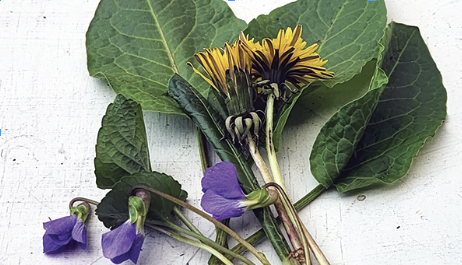
Even if you can’t totter any farther than your front yard, you can still forage healthful spring plants. Seymour recommends picking young dandelions with their crowns and flowers to make dandelion fritters. The flowers are surprisingly sweet compared with the bitter greens later in the season.
Out on a Hike
Fortified by your dandelion fritters, you can now think about a foraging hike. You will need a basket, trug, or canvas bag to hold the herbs you collect, plus sharp clippers for cutting, and gloves — preferably rose gloves to protect your hands from any thorns or scratches. Seymour recommends Sears Island as a great place to gather young spring greens including young bayberry leaves.
Melanie Scofield of Rockland is the founder of Earthwalk School of Herbal Traditions. She teaches courses for beginners to professionals. Schofield recommends bayberry leaves as the base for a spring tonic. Stew the leaves in water and then discard the solids. Bayberries can be found along the coast particularly in rocky areas. She also likes stinging nettles to add zip. Stinging nettles grow in mottled shade and are present in most Maine gardens.
For a Post-Hike Massage
“We have access to everything we need; it is right here,” said herbalist Heather Goulette-Gamage of Brunswick, who is a massage therapist and herbalist.
Goulette-Gamage uses foraged herbs in her massage oils. When muscles ache after a foraging hike, try Solomon’s seal oil. In the springtime Solomon’s seal grows quickly into arching branches with small white flowers. Dig the roots, drying them thoroughly and add to massage oils.
Goulette-Gamage also recommends St. John’s wort roots. This plant has yellow blossoms in June and the plant itself is sometimes used to relieve depression. For massage oil, dig the roots, dry them, and add to massage oil. Let the oil sit in a sunny window until it turns bright red.
Familiar Finds
Brooke Thompson of Bowdoinham runs The Modern Herbalist Co. She suggests both violets and curly dock, plants familiar to Maine gardeners, as foraging feasts. Violets can be used in salads as a bright addition or cooked into a bright blue syrup that can ease coughs or be added to cocktails or mocktails.
Curly dock is ever-present in gardens and roadsides but Thompson cautions that herbs gathered too near roads or railroad beds should be avoided because they contain chemical pollutants. Clean, rinsed young dock leaves can be boiled and enjoyed like other spring greens topped with olive oil and lemon juice.
Always ensure accurate identification of any wild plant, mushroom, or other foraged item before consumption. Use multiple reliable sources or consult with an experienced forager or botanist. Do not consume any wild plant or fungi unless you are 100% certain of its identity and edibility. Additionally, check local laws and regulations before foraging, as some areas may have restrictions or protected species.