Writing by Hand
The art of letter writing is something to hold onto
By Robin Clifford Wood
When was the last time you received a handwritten letter? When did you last write one? Some say letter-writing is a lost art, but there are a lot of compelling reasons to find it again. Who doesn’t know that rush of happy anticipation on recognizing the familiar penmanship of someone you love on an envelope buried in the gloom of bills and junk mail?
When I was in grade school in the mid-1960s, there was a move away from teaching cursive writing. I had looked forward to learning the art of beautiful penmanship, especially those lovely, swirly capital letters. Disappointed, I decided to teach myself. I particularly loved forming the D, with all its loops and back loops, and I painstakingly practiced distinguishing capital F from T. Little did I know I was doing a lot more than making pretty shapes.
Recent brain-imaging research has indicated that forming letters by hand on paper has a slew of benefits for developing brains. Writing by hand — either in print or cursive — integrates the brain’s visual and motor centers, making connections that lead to better and longer-lasting learning.
Influenced by these studies, many U.S. states have reintroduced cursive writing instruction into their school curricula, citing the following benefits:
- Handwriting exercises fine motor skills, which are declining in young people.
- Writing by hand requires no electronic aids, so screen time is reduced.
- History’s primary resources are becoming inaccessible. Teachers have found that students are no longer able to read old documents written in cursive.
- Many students cannot sign their name in cursive.
Another great loss we incur with the abandonment of handwriting is more personal: human connection.
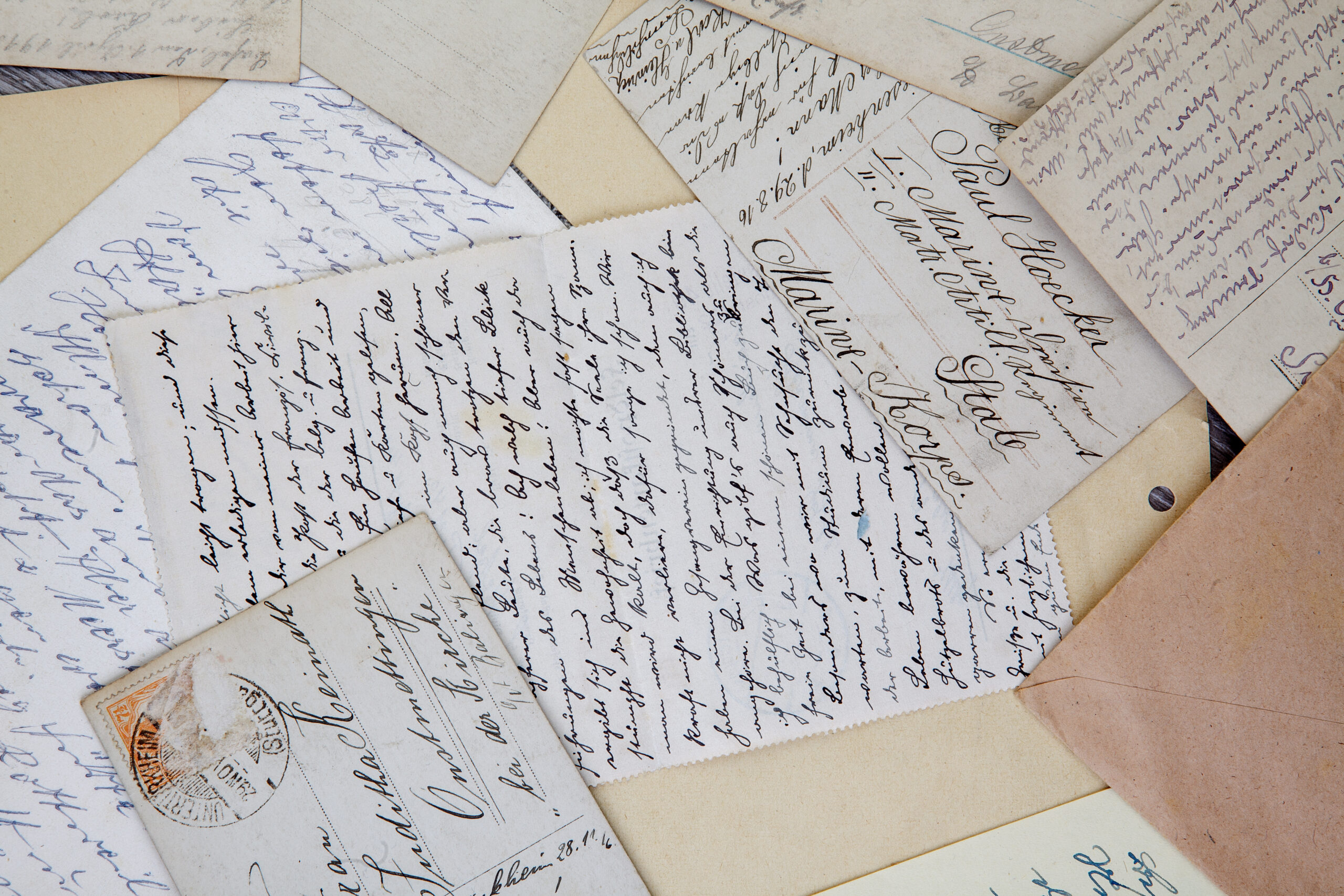
When I was researching my biography of Rachel Field, I spent long days immersed in archive collections. Wearing cotton gloves to protect the brittle documents of Rachel’s life from the 1910s to 1940s, I read dozens of her letters to friends, colleagues, lovers, and family. In adulthood, Rachel sometimes typed her letters, but they lacked the urgency or playfulness revealed by her handwriting — a loopy, chaotic scrawl to her mother; the neat, self-deprecating formalities sent to an impatient publisher; the tiny P.S.’s Rachel scrunched into her margins; hand-colored drawings added to her signature page.
I would recognize Rachel Field’s writing anywhere. Her handwriting bloomed with personality; it’s part of the reason I fell in love with her.
In the summers of my childhood, when I was far from home, I used to exchange letters with school friends. During those pre-mobile-device days, phone calls were seldom possible, and when they were, they were too expensive. They were also, inevitably, public.
“Is that a long-distance call? Get off the phone! That’s costing us a dollar a minute!”
So we sent off handwritten news and secrets — with cross-outs or curlicues, tiny hearts to dot our i’s, giant letters of emphasis or little pictures in the margins — and sealed them in envelopes. The letters made their way from our hands into the hands of our bestie, over the miles, over the mountains, over the sea.
I remember well the stomach-flip of anticipation when I saw my best friend’s handwriting on an envelope, or the heat that flushed my cheeks when I recognized the penmanship of a boy I liked before I’d even broken the seal. So much personality flooded those letters. The writing would literally expand and contract with emotion. You’d get editorial notes or drawings tucked between lines, a change of ink color when a pen went dry, a smear of jelly, a mysterious erasure.
Try as they might to offer creative options, computer-generated type and emojis just aren’t the same.
With a handwritten letter, you cradle in your hands a physical relic that has been touched, leaned on, toiled over, and held by someone you care about. Handwriting connects us as no electronic communication ever can. It’s something to hold onto.
Summertime is here. Fire up your brain with pen and paper and share a human connection.