Oh My Gourd
funky, fun, and sometimes edible, Gourds Overflow Maine Farmstands This Time of Year
By Jasmine Cabanaw
We’re all familiar with the charm of the classic pumpkin when autumn arrives. These orange orbs line front steps, fill farm stands, appear in pies and coffees, and become jack-o’-lanterns by the end of October. Pumpkins are easily one of my favorite things ever, but when I’m looking to illuminate the strange, especially as it gets closer to Halloween, I let another member of the squash family take center stage.
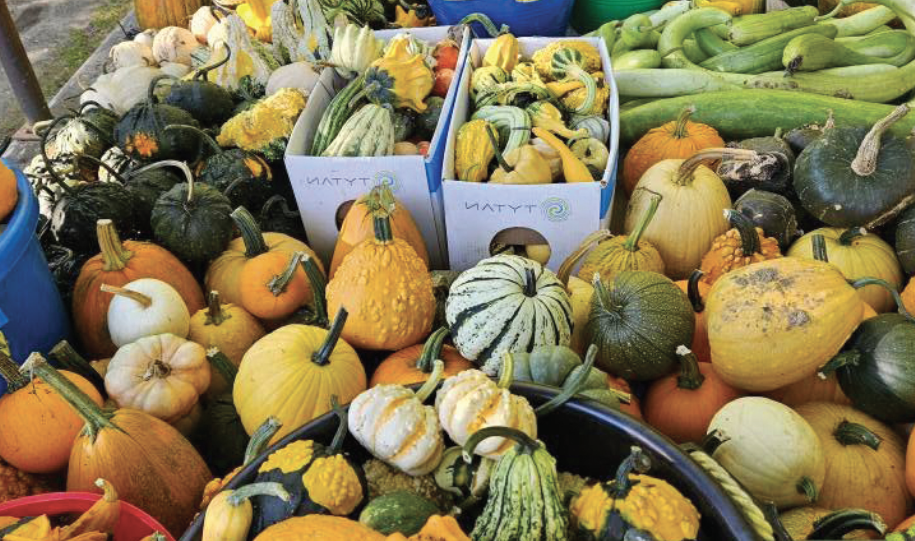
Across Maine, gourds offer a more unexpected way to celebrate the season. Knobby, striped, speckled, twisted, and sometimes downright strange, these colorful members of the squash family bring plenty of personality to fall decorating. Like a Tim Burton character, their imperfections are part of the charm. In fact, the stranger the gourd, the more interesting the display.
Part of the appeal of gourds is that no two seem exactly alike. Some are pear-shaped with long, curved necks. Others are covered in bumps and ridges. Colors range from creamy white and deep green to golden yellow, orange, and combinations of all four.
While a row of traditional orange pumpkins creates a classic fall look, a collection of gourds feels a little more spooktacular. I like to fill a wooden bowl with miniature varieties, pile them into an old bushel basket, scatter them down the center of a dining table, and mix them with pumpkins, dried corn, and fall foliage on the front porch.
Yes, I get a little obsessive with gourds this time of year, turning my house into an autumn version of an Easter egg hunt. Months can go by after Halloween, but I’ll still stumble upon a gourd tucked away in some nook I had forgotten about.
Go Big Or Gourd Home
Maine is no stranger to the appeal of gourds. With Maine farm stands overflowing with locally grown autumn produce, there is no shortage of interesting varieties. Some farms go all out, with dozens of varieties to choose from. Wallingford Farm in Kennebunk offers over 35 varieties of gourds, pumpkins, and squash. Shute’s Pumpkin and Squash Stand along Route 7 in Brooks boasts 70 kinds of squash, over 100 kinds of pumpkins, and 30 kinds of gourds.
One of my favorite fall outings is a visit to a Maine farm stand to find the perfect gourd. With all those varieties, I can easily spend a lazy afternoon pouring over bins filled with colorful choices. The question is what to do with all those gourds once I get home!
Luckily, I can turn to Maine’s craft scene, where gourds have already carved out a niche. Their unusual shapes, hard shells, and natural textures make them especially appealing to artists who enjoy working with organic materials.
Crafters are transforming gourds into everything from birdhouses and bowls to ornaments, vases, lanterns, and decorative sculptures. Some are painted with distinctly Maine imagery such as loons, moose, lighthouses, pine trees, and coastal scenes. Others are carved with intricate patterns, fitted with lights to create glowing lamps, or turned into whimsical figures and seasonal decorations.
One notable artist and farmer is Aaron Letourneau of New Gloucester, who grows hundreds of gourds each year (in 2025, it was 900!), training the sprawling vines over tunnels before harvesting and drying them for future art projects. His creations include gourd birdhouses and elaborate lamps, including a Maine-grown gourd lamp featuring the silhouette of a bull moose.
The Edible Gourd
Some of the squashes piled high at Maine farm stands are just as useful in the kitchen as they are on the front porch. Popular squash varieties include striped delicata and dark green buttercup to hefty blue Hubbard squash. There is such a wide range in flavors that Shute’s Pumpkin and Squash stand includes tasting notes next to each variety.
“Mashed Potato Squash: Mild, buttery and subtly sweet, with a creamy, fluffy texture and light nutty notes.”
When it comes to eating gourds, however, there are only a few that please the palate. Most gourds are tough and bitter, making them perfect for crafting but a horror for eating. The exceptions to this are the bottle gourd and the luffa gourd.
Also called calabash, when harvested young and tender, bottle gourds can be cooked much like zucchini. Luffa gourd is also edible when harvested young, before its interior becomes fibrous. Mature luffas are the ones dried and turned into natural sponges.
From seed to table is your best bet for gathering edible gourds. Fedco and Johnny’s Selected Seeds are two options for getting started with luffa and calabash.
How to Cook Bottle Gourds
Select: Choose small, tender bottle gourds with smooth skin.
Prep: Rinse the gourd, peel the outer skin with a vegetable peeler, and chop it into cubes or slices.
Cook: For an easy side dish, add enough oil to coat a pan and fry the chopped or sliced gourd at medium heat. Add spices, salt and herbs to taste. Bottle gourd can also be added to stir-fries, or dropped into soups and stews where they soften like summer squash.
Let the Gourd Times Roll
Collecting oddly shaped gourds can become its own fall tradition. Instead of searching for the largest pumpkin in the patch, children can compete to find the bumpiest, curliest, or funniest-looking gourd. A few ideas include such gems as gourd naming competitions, gourd craft days, gourd scavenger hunts, and a gourd swap (even better when paired with cookies).
Fall in Maine has never needed much embellishment. Apple orchards, weathered barns, farm stands, changing leaves, and stacks of firewood already provide the backdrop. Gourds fit naturally into that landscape.
The next time you stop at a Maine farm stand this fall, I invite you to look beyond the pumpkin pile and peek into the gourd bins. Pick up the striped one. Grab the one covered in bumps. Choose the strange little gourd that doesn’t quite look like anything else.
Let this be the year the pumpkins on your porch get some competition.